
As an Amazon Associate, InjuryComfort earns from qualifying purchases. Product details can change on Amazon.

Recovery product guide

Best injury recovery products for cold therapy, knee support, and muscle comfort.

InjuryComfort is built as a practical recovery resource, not a thin product list. Every recommendation below includes an image, plain-language buying criteria, realistic use guidance, and safety context so shoppers can understand what each tool is good for before opening Amazon.

OpenAI generated recovery product collection

Premier recovery library

Every product includes real advice, not filler copy.

Use this page as a buyer’s guide and a recovery planning reference. The sections explain when each tool tends to fit, what details to inspect before buying, how to use the product more responsibly, and when symptoms deserve professional attention. That depth helps human readers, search engines, and answer engines understand exactly what InjuryComfort covers.

Cold therapy

Cold therapy product guidance

Reusable ice packs and wraps for swelling, soreness, and targeted comfort. The products in this section are grouped by the recovery job they support so visitors can compare them quickly and then read deeper before choosing.

Cold therapy recovery product image
Reusable Gel Ice Pack product image
Cold therapy

Reusable Gel Ice Pack

A reusable gel ice pack is the workhorse of a home recovery kit: simple, flexible, inexpensive, and useful across many sore areas.

reusable gel ice packcold therapy packlarge flexible ice pack
Check current Amazon options

Best for

  • General swelling comfort
  • Knees, shoulders, backs, and ankles
  • Family first-aid kits
  • Keeping one cold pack always ready

What to check before buying

  • Flexible when frozen
  • Leak-resistant seams
  • Comfortable fabric cover or towel use
  • Size matched to the body area

Quick safety note

Comfort tools can support rest and sensible activity, but they do not diagnose injuries. Seek qualified care for severe pain, new neurological symptoms, major swelling, instability, fever, or symptoms that worsen instead of improving.

Reusable Gel Ice Pack buying and use guide

A reusable gel ice pack is one of the most practical injury comfort products because it is not tied to a single body part. One flexible pack can be used around a knee after a long day, across a sore shoulder, on the lower back, or near an ankle that feels irritated after activity. The product is simple, but the buying decision still matters. A pack that freezes into a hard brick, leaks at the seams, or is too small for the target area will be frustrating right when the user wants quick relief.

The first feature to check is flexibility after freezing. Many listings claim flexibility, but reviews are where shoppers learn whether the pack actually bends. A flexible gel pack wraps more comfortably around joints and uneven surfaces. A stiff pack may still cool effectively, but it can create pressure points and slide off curved areas. For knees and shoulders, flexibility is usually worth prioritizing over ultra-low temperature.

Size is the second decision. A small pack is convenient for hands, feet, or spot treatment. A medium or large pack is better for thighs, backs, shoulders, and knees. Some households benefit from owning two sizes: one compact option and one larger pack that lives in the freezer. If the pack will be used by multiple people, durability and cleaning become more important than color or packaging.

Cold therapy should be used with skin protection. Wrap the pack in a towel or use the included sleeve if it has one. Short sessions with breaks are safer than leaving intense cold on the skin for long periods. Watch for numbness, burning, unusual color changes, or discomfort that increases instead of easing. People with circulation issues, altered skin sensation, diabetes-related nerve changes, or cold sensitivity should ask a clinician how to use cold safely.

Reusable gel packs also work best when storage is consistent. Keep the pack flat in a clean freezer area so it is ready when needed. Check occasionally for leaks, odor, or hardened gel. If the pack is used for both hot and cold therapy, follow the heating instructions carefully; overheating can damage the pack and create burn risk. Do not guess with microwave time.

For SEO and shopping intent, phrases like large reusable ice pack, flexible cold therapy pack, and gel ice pack for injuries all point to this basic need: a dependable, ready-to-use cold source. The best product is not necessarily the most complicated. It is the one that stays flexible, seals well, covers the intended area, and fits easily into a repeatable recovery routine.

Cold Therapy Compression Wrap product image
Cold therapy

Cold Therapy Compression Wrap

A cold therapy compression wrap combines targeted chilling with strap-on placement, making it useful when a loose ice pack will not stay where it belongs.

cold therapy wrapice wrap with strapcompression cold pack
Check current Amazon options

Best for

  • Knees and elbows
  • Hands-free cold sessions
  • Light compression with cold
  • Targeted swelling routines

What to check before buying

  • Straps long enough for target joint
  • Removable gel inserts
  • Even cold distribution
  • Clear cold-session instructions

Quick safety note

Comfort tools can support rest and sensible activity, but they do not diagnose injuries. Seek qualified care for severe pain, new neurological symptoms, major swelling, instability, fever, or symptoms that worsen instead of improving.

Cold Therapy Compression Wrap buying and use guide

A cold therapy compression wrap solves a common problem: ordinary ice packs slide off. When the sore area is a knee, elbow, shoulder, or calf, holding a pack in place can be annoying enough that people skip the session altogether. A wrap adds straps so the cold source stays positioned while the user rests, reads, or elevates the area. That convenience is the main reason to consider this product category over a plain reusable gel pack.

The buyer should look carefully at strap design. Straps need to be long enough for the target area, easy to tighten, and secure without cutting into the skin. A wrap that works for an elbow may be too small for a thigh. A wrap that fits the knee may not sit well on the shoulder. Some products are marketed as universal, but universal does not always mean comfortable on every body shape. Recent reviews are useful for learning whether the wrap slips, twists, or creates pressure at the edges.

Compression should be mild and adjustable. The point is to keep the cold source in contact with the area and provide a sense of support, not to aggressively squeeze swelling out of tissue. If the area throbs, tingles, changes color, or feels worse, loosen or remove the wrap. People with circulation concerns, nerve symptoms, or significant swelling should be especially cautious and should follow professional guidance.

The cold component also matters. Removable gel packs can be easier to freeze, clean, and replace. Sewn-in gel panels may feel smoother but can be harder to manage if one area freezes unevenly. Check whether the wrap remains flexible after freezing and whether the instructions recommend a towel layer. Skin protection is still important, even with a fabric wrap.

This product is strongest for short, planned cold sessions. It is not meant to be worn all day. Use it while seated or resting, then remove it and reassess the area. Pair it with elevation when appropriate. If pain is intense, swelling is severe, or the joint cannot bear weight after an injury, do not treat the wrap as the final answer. Comfort tools can support recovery, but they do not diagnose the injury.

When comparing Amazon options, search terms like cold therapy compression wrap, ice wrap with strap, and knee cold pack wrap can surface similar products. The best choice will have clear sizing, durable hook-and-loop closures, flexible cold inserts, and straightforward cleaning instructions. A wrap that is easy to set up will be used more consistently than a bulky system that feels like a project.

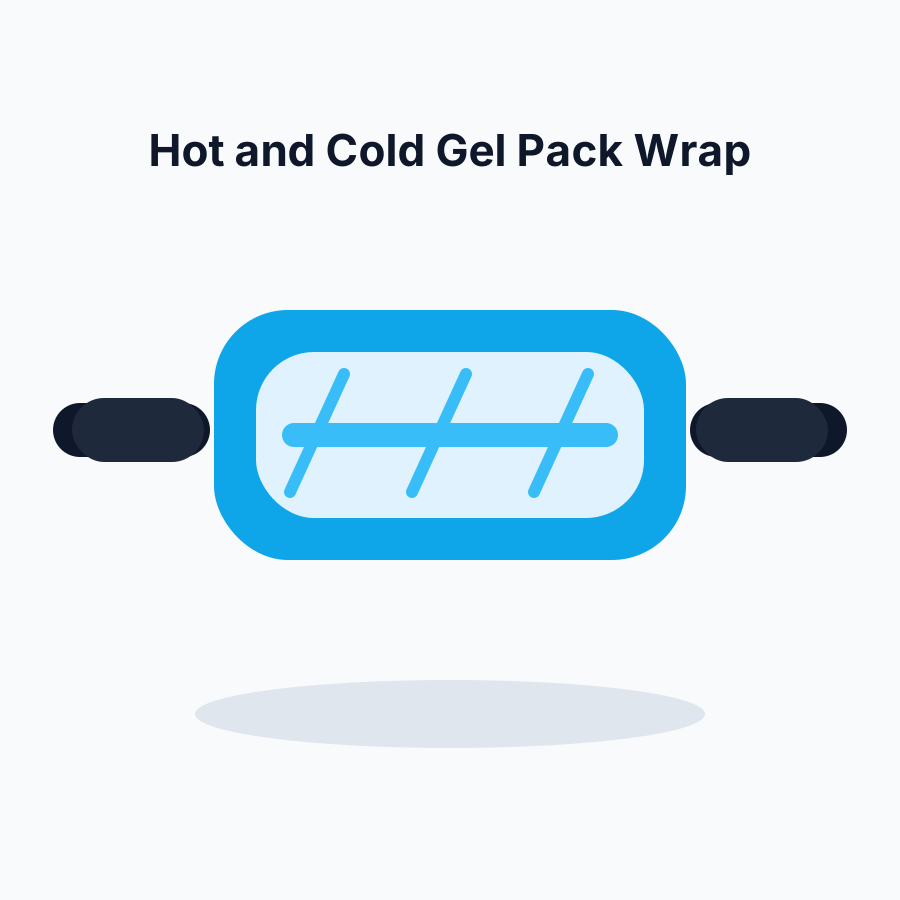
Hot and Cold Gel Pack Wrap product image
Cold therapy

Hot and Cold Gel Pack Wrap

A hot and cold gel pack wrap gives shoppers one flexible product for chilled comfort, gentle warmth, and strap-on placement.

hot cold gel pack wrapreusable therapy wrapgel pack with strap
Check current Amazon options

Best for

  • Cold or heat routines
  • Reusable home comfort kits
  • Sore joints and muscles
  • People who want one versatile wrap

What to check before buying

  • Microwave and freezer instructions
  • Leak-resistant gel pack
  • Comfortable sleeve
  • Straps that match the target area

Quick safety note

Comfort tools can support rest and sensible activity, but they do not diagnose injuries. Seek qualified care for severe pain, new neurological symptoms, major swelling, instability, fever, or symptoms that worsen instead of improving.

Hot and Cold Gel Pack Wrap buying and use guide

A hot and cold gel pack wrap appeals to shoppers who want versatility. Cold can feel useful for swelling, recent soreness, or a flare-up after activity. Gentle warmth can feel better for stiffness, muscle tension, or a wind-down routine. A reusable wrap gives one product a role in both situations, which is convenient for homes that do not want separate cold packs, heating pads, and straps scattered across cabinets.

The most important buying detail is instruction clarity. Heating a gel pack is not the place to guess. The listing should explain microwave time, freezer time, whether the pack must be wrapped, and how to inspect for damage. Overheating can cause burns or rupture the pack. Freezing can make some packs too stiff. Good instructions are a safety feature, not a boring detail.

The wrap design matters because placement changes the experience. A gel pack held against the skin with a towel requires one hand or awkward positioning. A strap-on wrap can stay in place while the user rests. That is especially useful for knees, elbows, shoulders, and backs. Still, straps should not be cranked tight. The purpose is contact and comfort, not aggressive compression.

Choose hot or cold based on the situation and personal response. Cold is commonly chosen when the area feels warm, swollen, or freshly irritated. Heat is commonly chosen for stiffness and non-acute tightness. If either makes symptoms worse, stop. Avoid heat over areas that are swollen, numb, or inflamed unless a clinician has advised it. Avoid cold if circulation or skin sensation is impaired without professional guidance.

Maintenance is simple but important. Store the pack clean, dry the sleeve after use, and check seams for leaks. If the gel smells unusual, separates dramatically, or the outer material cracks, replace it. A wrap that touches skin repeatedly should be easy to clean, especially if it is used after workouts or shared within a household.

When comparing hot cold gel pack wraps on Amazon, do not let feature lists distract from basics: safe heating directions, flexible gel, comfortable fabric, reliable straps, and real sizing information. A versatile product should reduce decision fatigue. If it is confusing to heat, hard to strap, or uncomfortable against the skin, it will not become the reliable comfort tool shoppers are actually looking for.

Knee support

Knee support product guidance

Compression braces, straps, and cold wraps for everyday knee recovery routines. The products in this section are grouped by the recovery job they support so visitors can compare them quickly and then read deeper before choosing.

Knee support recovery product image
Adjustable Compression Knee Brace product image
Knee support

Adjustable Compression Knee Brace

An adjustable knee brace is for shoppers who want support they can tune during light activity, errands, or recovery days without committing to a rigid medical brace.

compression knee braceadjustable knee supportknee recovery brace
Check current Amazon options

Best for

  • Light walking support
  • Errands and recovery days
  • Adjustable compression
  • Comparing open-patella designs

What to check before buying

  • Sizing chart with thigh and calf measurements
  • Secure straps that do not bunch
  • Breathable materials
  • Return policy if fit is wrong

Quick safety note

Comfort tools can support rest and sensible activity, but they do not diagnose injuries. Seek qualified care for severe pain, new neurological symptoms, major swelling, instability, fever, or symptoms that worsen instead of improving.

Adjustable Compression Knee Brace buying and use guide

An adjustable compression knee brace can make everyday movement feel more controlled, especially when a knee feels tired, mildly unstable, or sensitive during routine activity. The key word is adjustable. A sleeve may offer even compression, but straps let the wearer fine-tune how much support they feel above, below, and around the kneecap. That flexibility is useful for shoppers who want one brace for different parts of the day: looser while sitting, more secure during a walk, and removed when the skin needs a break.

Fit is the purchase decision that matters most. Measure the leg according to the seller’s chart, not according to a guess based on pants size. A brace that slides down will be distracting and ineffective; a brace that is too tight can leave marks, pinch behind the knee, or make swelling feel worse. Look closely at how the straps cross, whether the product has stabilizers, and whether reviewers mention bunching during stairs or longer walks. Comfort during movement is more important than how supportive the brace appears in a still product photo.

A knee brace is best used as one part of a recovery routine, not as permission to ignore pain. If the brace helps you move with better alignment and confidence during light tasks, it may be doing its job. If it encourages you to push through sharp pain, swelling, locking, buckling, or symptoms after a fall, it is the wrong tool for the moment. Those signs deserve professional evaluation. The brace should support sensible activity, not hide a problem that is getting worse.

Skin comfort also deserves attention. Neoprene-style materials can feel warm, which some people like and others dislike. If you plan to wear the brace for errands or workouts, breathable fabric and smooth edges become more important. Remove the brace periodically, check for redness, and follow cleaning instructions so sweat and odor do not shorten the product’s useful life. A brace that smells bad or irritates the skin will stop being used, even if it was technically supportive.

For SEO-style shopping comparisons, people often search for open-patella brace, compression knee support, and adjustable knee stabilizer. Those phrases are useful, but shoppers should still read the practical details behind the listing. Does the brace come in real sizes, or is it one-size-fits-most? Are replacement straps available? Does it fit under clothing? Can it be worn on either knee? These questions matter more than generic claims about athletic performance.

A good adjustable knee brace earns its place by being easy to put on, secure without being harsh, and simple to remove when the knee needs rest. Use it for supported light movement, pair it with appropriate strengthening or mobility work when cleared, and treat worsening symptoms as information rather than something to strap down harder.

Patella Tendon Strap product image
Knee support

Patella Tendon Strap

A patella tendon strap is a compact knee-support option for shoppers who want targeted below-knee compression rather than a full brace.

patella tendon strapjumper's knee strapbelow knee support
Check current Amazon options

Best for

  • Below-knee support
  • Walking and stairs
  • Light activity breaks
  • People who dislike full braces

What to check before buying

  • Adjustable strap length
  • Comfortable front pad
  • Low-profile fit
  • Secure closure that does not scratch skin

Quick safety note

Comfort tools can support rest and sensible activity, but they do not diagnose injuries. Seek qualified care for severe pain, new neurological symptoms, major swelling, instability, fever, or symptoms that worsen instead of improving.

Patella Tendon Strap buying and use guide

A patella tendon strap is smaller than a knee brace but more targeted than a generic sleeve. It sits below the kneecap and applies pressure across the patellar tendon area. Shoppers often compare this category when they want a low-profile support option for walking, stairs, errands, or activity breaks. Because it is compact, it can be easier to wear under clothing and less warm than a full brace.

Fit is still the central question. The front pad should rest comfortably below the kneecap, not on top of it, and the strap should tighten enough to stay in place without digging into the back of the leg. A strap that migrates, twists, or scratches will not be used. Check sizing, closure style, and whether reviewers with similar leg sizes found it secure.

A patella strap is not a cure for knee pain. It may change how forces feel around the front of the knee during light activity, but it should not be used to push through sharp pain, major swelling, locking, buckling, or pain after a traumatic injury. Those symptoms call for medical evaluation. The strap belongs in the comfort-and-support category, not the diagnosis category.

The best use case is controlled, short-duration support. Put it on for the activity that tends to bother the knee, then remove it afterward and notice how the knee responds. If the strap leaves deep marks, causes tingling, or increases discomfort, loosen it or stop using it. Skin and circulation feedback matter as much as support feedback.

Compared with a full knee brace, the patella strap is easier to pack and less visually obvious. Compared with a compression sleeve, it targets a smaller area. That makes it useful for some shoppers and too narrow for others. If the whole knee feels unstable or swollen, a broader support product or professional guidance may make more sense.

Amazon search terms like patella tendon strap, jumper’s knee strap, and below knee support lead to many similar-looking options. Focus on the quality of the pad, the softness of the strap backing, adjustability, and recent reviews about slipping. The best strap is not the one with the most dramatic claims. It is the one that fits securely, feels comfortable, and supports sensible activity without pretending to solve every knee problem.

Muscle recovery

Muscle recovery product guidance

Massage tools and mobility products for tight muscles, workouts, and daily aches. The products in this section are grouped by the recovery job they support so visitors can compare them quickly and then read deeper before choosing.

Muscle recovery recovery product image
Deep Tissue Foam Roller product image
Muscle recovery

Deep Tissue Foam Roller

A textured foam roller supports warmups, cooldowns, and mobility work for people who want a simple tool for large muscle groups.

deep tissue foam rollertextured foam rollermobility roller
Check current Amazon options

Best for

  • Quads, calves, glutes, and upper back
  • Warmups and cooldowns
  • Home mobility corners
  • Runners and gym users

What to check before buying

  • Texture level that matches tolerance
  • Density that does not collapse
  • Length for the target areas
  • Easy-to-clean surface

Quick safety note

Comfort tools can support rest and sensible activity, but they do not diagnose injuries. Seek qualified care for severe pain, new neurological symptoms, major swelling, instability, fever, or symptoms that worsen instead of improving.

Deep Tissue Foam Roller buying and use guide

A deep tissue foam roller is a mobility tool, not a magic fix. Its usefulness comes from giving large muscle groups a repeatable way to receive pressure before or after activity. Runners may use it for calves and quads. Gym users may use it for glutes, lats, or upper back. Desk workers may use it to add movement breaks. The roller can help a person slow down, notice tight areas, and prepare for gentle mobility work.

Texture is the main buying decision. A smooth roller spreads pressure evenly and is often better for beginners. A textured roller concentrates pressure into ridges or knobs, which some people like for dense muscle areas but others find too intense. If you are new to rolling or sensitive to pressure, do not assume more aggressive texture means better results. Comfort and consistency matter more than toughness.

Density and size also affect the experience. A soft roller may collapse and feel unstable. A very hard roller may be too intense for daily use. Longer rollers are easier for upper back work because they provide more surface area; shorter rollers are easier to store and travel with. Think about where the roller will live. A product that fits next to a mat or under a bench is more likely to become part of a routine.

Technique should stay controlled. Roll slowly, avoid directly rolling over joints, and do not grind into sharp pain. For sore areas, a few short passes followed by easy movement may be enough. Rolling should not leave bruises or make symptoms worse the next day. People with acute injuries, unexplained swelling, blood clot risk, osteoporosis concerns, or nerve symptoms should get guidance before applying deep pressure.

A foam roller pairs well with active recovery. Use it before a warmup to bring attention to tight areas, or after activity to downshift. Follow it with light mobility or stretching if appropriate. The roller is less useful when it becomes a substitute for sleep, progressive strengthening, hydration, or appropriate medical care. It is a support tool in a bigger system.

Search terms like deep tissue foam roller, textured foam roller, and mobility roller all describe the same general category. The product that ranks highest is not automatically the right one. Read reviews for durability, odor, surface peeling, and whether the texture feels painfully sharp. A roller that feels good enough to use three times a week is better than an intense roller that stays in the closet.

Percussion Massage Gun product image
Muscle recovery

Percussion Massage Gun

A percussion massage gun is a powered recovery tool for people who want quick, adjustable muscle work without manually applying pressure.

percussion massage gundeep tissue massagermuscle recovery massager
Check current Amazon options

Best for

  • Large muscle groups
  • Post-workout routines
  • Adjustable pressure
  • People who want fast self-massage

What to check before buying

  • Multiple speed settings
  • Attachment quality
  • Battery life
  • Noise level and grip comfort

Quick safety note

Comfort tools can support rest and sensible activity, but they do not diagnose injuries. Seek qualified care for severe pain, new neurological symptoms, major swelling, instability, fever, or symptoms that worsen instead of improving.

Percussion Massage Gun buying and use guide

A percussion massage gun is popular because it turns self-massage into a faster, lower-effort routine. Instead of leaning on a ball or using hand pressure, the device delivers repeated pulses through interchangeable attachments. It can feel useful on large muscle groups such as quads, glutes, calves, and upper back muscles. The best use is controlled and moderate: short sessions, broad muscle areas, and attention to how the tissue responds.

The buying decision should start with control. Multiple speed settings matter because not every area tolerates the same intensity. A quiet motor matters if the device will be used in the evening or shared living space. Grip comfort matters because a heavy or awkward device becomes difficult to hold at the right angle. Attachment quality also matters; softer heads can feel better for sensitive areas, while firmer heads may be useful for larger muscles.

Technique is where many shoppers go wrong. More force is not automatically better. Keep the device moving slowly over muscle, avoid bones and joints, and do not press hard into sharp pain. A minute or two on a muscle group may be enough. If soreness increases dramatically, bruising appears, numbness occurs, or pain radiates, stop. People with acute injuries, blood clot risk, implanted devices, pregnancy-related restrictions, or medical conditions should ask a clinician before using a percussion device.

A massage gun can be paired with warmups, cooldowns, and mobility work. Before activity, light use may help a person feel more aware of tight areas. After activity, it can be part of a downshift routine. It should not replace progressive strengthening, sleep, hydration, or treatment for persistent pain. Think of it as a convenience tool that helps you spend a few minutes on recovery more consistently.

Battery life and charging are practical details that affect long-term use. A device that is always dead will be ignored. Look for clear runtime claims, accessible charging, and reviews that mention battery decline over time. Also check noise. Some devices are powerful but loud enough that people avoid them in shared spaces.

Search phrases like percussion massage gun, deep tissue massager, and muscle recovery massager are crowded with aggressive claims. InjuryComfort’s advice is to shop for control, comfort, and durability instead. A good massage gun should make gentle recovery easier, not turn every sore spot into a high-intensity project.

Migraine comfort

Migraine comfort product guidance

Cooling comfort products for headaches, screen breaks, and low-light rest. The products in this section are grouped by the recovery job they support so visitors can compare them quickly and then read deeper before choosing.

Migraine comfort recovery product image
Migraine Relief Cap product image
Migraine comfort

Migraine Relief Cap

A migraine cap is a comfort-first tool for people who want cold, gentle pressure, and darkness available without setting up towels, loose ice packs, or a complicated routine.

migraine relief capheadache ice packcooling compression cap
Check current Amazon options

Best for

  • Headache rest breaks
  • Screen fatigue wind-downs
  • Cooling compression without loose ice
  • Quiet recovery kits

What to check before buying

  • Stretchy fabric that is not painfully tight
  • Freezer-safe gel construction
  • Coverage around temples and forehead
  • Easy cleaning instructions

Quick safety note

Comfort tools can support rest and sensible activity, but they do not diagnose injuries. Seek qualified care for severe pain, new neurological symptoms, major swelling, instability, fever, or symptoms that worsen instead of improving.

Migraine Relief Cap buying and use guide

A migraine relief cap belongs in the category of simple, low-effort comfort tools. It is not a cure for migraines and it should not replace medical guidance for recurring, severe, or unusual headaches. Its value is practical: when pain, light sensitivity, or fatigue makes it hard to think clearly, the cap gives you one object to reach for instead of building a cold compress from scratch. That matters because the best recovery routine is often the one a person can actually follow when they feel uncomfortable.

The main buying question is pressure. Some shoppers want a snug compression feel around the forehead and temples; others need something softer because pressure can aggravate symptoms. Look for language about stretch, sizing, and return policy before choosing. A cap that is too tight will not become more useful just because it looks premium in a product photo. The fabric should feel smooth, the seams should not sit directly on sensitive areas, and the gel should remain flexible enough to shape around the head after chilling.

Use it as part of a calm environment rather than as the whole solution. Dim the room, reduce screen brightness, drink water if appropriate, and give the cap time to warm gradually instead of leaving intense cold on the skin for too long. Many people prefer short sessions with breaks because it is easier to notice whether the cold is helping or becoming irritating. If numbness, burning, dizziness, or worsening symptoms appear, remove the cap and reassess.

A good migraine comfort setup also includes storage habits. Keep the cap in a clean freezer bag so it does not pick up food odors, and give it a consistent place in the freezer so it is available quickly. If more than one person in the home may use it, consider hygiene, labeling, and whether a washable cover is available. Small routines like these make the product feel dependable instead of like another item lost in a drawer.

The cap is most useful for shoppers who already know cold and gentle pressure are comfortable for them. People with new neurological symptoms, head injury, severe sudden headache, fever, vision changes, or symptoms that feel different from their normal pattern should seek medical advice. InjuryComfort presents this product as a comfort aid, not a diagnostic tool. The right purchase is the one that supports rest while leaving room for professional care when symptoms call for it.

When comparing Amazon options, read recent reviews for fit, odor, freezing stiffness, and durability. Product photos can make every cap look similar, but reviews often reveal whether the gel stays evenly distributed and whether the fabric stretches out. Prioritize comfort and repeat use over novelty features. A plain cap that stays flexible, chills evenly, and feels good against the skin is usually more valuable than a flashy version with poor fit.

Back and shoulder care

Back and shoulder care product guidance

Self-massage and compression tools for hard-to-reach tension areas. The products in this section are grouped by the recovery job they support so visitors can compare them quickly and then read deeper before choosing.

Back and shoulder care recovery product image
Trigger Point Massage Tool Set product image
Back and shoulder care

Trigger Point Massage Tool Set

Trigger point tools help apply controlled pressure to tight back, shoulder, and hip areas when fingers fatigue too quickly or the spot is hard to reach.

trigger point massagerback massage toolshoulder tension relief
Check current Amazon options

Best for

  • Desk-related shoulder tension
  • Controlled self-massage
  • Back and hip pressure points
  • Small recovery kits

What to check before buying

  • Shape that reaches the target area
  • Firm but smooth contact points
  • Easy grip
  • No sharp seams or slick handles

Quick safety note

Comfort tools can support rest and sensible activity, but they do not diagnose injuries. Seek qualified care for severe pain, new neurological symptoms, major swelling, instability, fever, or symptoms that worsen instead of improving.

Trigger Point Massage Tool Set buying and use guide

Trigger point massage tools are useful because they make pressure more repeatable. A thumb, knuckle, or elbow can work for a few seconds, but hands fatigue quickly and hard-to-reach areas are awkward. A well-shaped tool gives the user leverage, which can be helpful for shoulder blade tension, upper back tightness, glute discomfort, or general post-workout muscle guarding. The goal is not to bruise tissue or chase pain. The goal is to apply steady, tolerable pressure long enough for the nervous system and muscle to settle.

The best tool depends on the target area. A cane-shaped massager can reach around the shoulder blade. A small ball can work against a wall for the upper back or glutes. A handheld tool may be easier for calves, forearms, and feet. Shoppers should avoid buying the largest kit simply because it looks complete. More pieces can mean more clutter. The better choice is the tool whose shape matches the area you actually struggle to reach.

Use pressure slowly. Start with a mild level, breathe normally, and hold for short periods rather than grinding aggressively. If the sensation feels sharp, electrical, numb, or radiating, stop. Those signals are different from ordinary muscle tenderness. People with new injuries, unexplained swelling, blood clot risk, nerve symptoms, or medical restrictions should ask a clinician before using deep pressure. Self-massage should feel like a controlled comfort strategy, not a test of pain tolerance.

A trigger point routine works best when paired with movement. After gentle pressure, try easy range-of-motion drills or light stretching if appropriate. The tool may reduce guarding enough to make movement feel smoother, but lasting improvement often comes from the combination of pressure, mobility, hydration, rest, and better work posture. For desk workers, the product may be most useful next to the chair rather than hidden with workout gear.

When comparing products, inspect the contact surfaces. Cheap tools with rough seams can irritate skin, while overly slick handles can make pressure hard to control. Reviews often mention whether a tool flexes too much, breaks under pressure, or is awkward for smaller hands. A simple, sturdy design usually beats a complex kit with pieces that are hard to use.

This category is a strong fit for shoppers who already know they respond well to massage pressure. It is less appropriate for acute injuries, severe unexplained pain, or symptoms that are spreading. Treat the tool as a way to support comfort between professional care, exercise, and rest. The right trigger point product should help you apply less force more precisely, not encourage more force everywhere.

How to choose

Match the product to the recovery job, then keep the routine simple.

Cold therapy products are commonly chosen for swelling and fresh soreness. Compression products can support a joint during light activity. Massage and mobility tools are usually better for tight muscles, warmups, cooldowns, and maintenance routines. The right product should make a sensible habit easier, not encourage someone to ignore worsening symptoms.

For swelling

Compare cold packs, cold wraps, and reusable gel products that can be kept ready in the freezer.

For joint support

Look for adjustable compression, comfortable materials, and fit that stays secure during light movement.

For tight muscles

Use foam rollers, massage tools, or percussion devices gradually and avoid sharp pain.

Frequently asked questions

Common questions before buying recovery products.

Should I use cold therapy or heat?

Cold therapy is commonly used for swelling and fresh soreness. Heat is often used for tight muscles and stiffness. Follow product instructions and ask a qualified clinician if symptoms are severe, unusual, or persistent.

Are these medical recommendations?

No. InjuryComfort is a shopping and education site, not medical advice. Product links are meant to help compare comfort tools, not diagnose or treat an injury.

Why do buttons open Amazon searches?

Amazon inventory, pricing, ratings, and bundles change often. Search links let shoppers verify current options and pick the size, quantity, and shipping speed that fits their needs.